
By Heath Gilbert | Cameron School District Exposed
On February 18, 2026, the Cameron Citizen-Observer published a response from Cameron R-1 Superintendent Dr. Matt Robinson addressing concerns I have raised about the district. The article was titled “Robinson Responds to Flurry of Gilbert’s Attacks.” In it, Robinson addressed four numbered issues. He closed by announcing he will not be responding to every letter to the editor.
Responding isn’t the same as answering. And in at least one case, what Robinson did say doesn’t hold up to the documented record.
I published a full analysis of the Citizen-Observer’s journalistic failures over at Breach Holder: No Name on It: The Citizen-Observer Prints a Platform Piece and Nobody Claims It. This article is about Robinson’s response itself — point by point, with documentation.
Point 1: The Landi Ban and Election Interference
What Robinson said: “Mr. Landi’s restrictions are part of the Board packet and can be accessed by anyone for their review: These restrictions stem from conduct that occurred before Mr. Landi’s decision to run for the Board.”
What the record shows: Robinson’s statement is factually inaccurate — though whether it matters to this community remains an open question. Three years of documented constitutional violations have not moved the needle for those who worship at the Church of the Dragon. For them, the mascot is the institution, and the institution cannot be questioned. But for those paying attention, this one does matter — because a superintendent made a provably false statement to a newspaper, and the newspaper printed it without challenge.
Dan Landi’s ban was extended based on a video that was recorded on the same day he filed his paperwork to run for the Cameron R-1 Board of Education — and the video was recorded after he completed that filing. The board reviewed this video. They knew what was on it. They knew when it was recorded. And they extended the ban anyway.
I have reviewed the video in full. The interaction it documents shows Dan Landi speaking politely and civilly with former district employee Gina Bainum. There is nothing in that video that would justify a ban extension — and certainly nothing that supports Robinson’s characterization of events to the newspaper.
There is a second problem with Robinson’s claim that deserves equal attention: he cannot possibly know when Dan Landi decided to run for the board. Robinson knows when Landi filed. The decision to run precedes the filing. Robinson offered the newspaper a statement he has no way of substantiating, and the newspaper printed it without asking a single follow-up question.
The Question Robinson Never Answered: Ann Clark
Board member Ann Goodwin-Clark is an incumbent candidate running for re-election to the Cameron R-1 Board of Education. Dan Landi is running against her.
Ann Goodwin-Clark voted to extend the ban on her direct electoral competitor without recusing herself from that vote.
Robinson’s response does not mention Ann Goodwin-Clark. Not once. The Citizen-Observer’s article does not mention Ann Goodwin-Clark. Not once.
Board President Andi Lockridge recused herself from voting on Dan Landi’s original ban because she acknowledged having a “part” in the complaint against him. That established clearly that the board understands the concept of recusal. Goodwin-Clark did not extend that same standard when her own political future was on the line.
The full documentation of Landi’s ban and the Goodwin-Clark vote is here: Incumbent Votes to Ban Electoral Opponent from School Property Through Election Period.
That is the election interference question Robinson was asked to answer. He didn’t answer it. He changed the subject to board packet accessibility — and that choice is telling.
Consider what happened on the same night: the board first voted to extend Dan Landi’s ban, then voted to approve the Bridges Legal Services contract. Robinson had no trouble addressing the contract publicly. He offered a defense of it to the newspaper without hesitation.
But on the vote that came first that same evening — the one where an incumbent board candidate voted to keep her electoral opponent banned from school property — Robinson had nothing to say. He had the same amount of time to look into both. He chose to comment on one and go silent on the other. That silence is its own answer.
Point 2: The Social Media Shutdown and Vinzent Cooper
What Robinson said: School districts are not required to maintain social media pages. The platforms had become “a forum for negativity and division” requiring significant staff time. He attached the district’s letter to the community and says “that speaks for itself.”
What Robinson didn’t say: Anything about Vinzent Cooper — or what shutting down those accounts may have destroyed.
Vinzent Cooper was banned from district property and meetings in November 2025. His ban letter cited “zero tolerance for cyberbullying” and “personal attacks on staff.” The specific conduct cited included comments made on the district’s own Facebook page — comments that called staff members “liars” and “thieves,” referenced a staff member as an “Oompa Loompa,” and raised concerns about library content and the district’s academic performance.
Read that carefully. “Zero tolerance for cyberbullying” and “personal attacks on staff” — applied to constitutionally protected criticism of public employees — is not a safety policy. It is a free speech suppression policy dressed in more acceptable language. By that standard, the district has declared zero tolerance for the First Amendment. Robinson did not address that in his response. He couldn’t, because there is no defensible answer. No wonder he failed to mention Cooper by name.
Those are constitutionally protected statements. Calling a public employee a liar is protected political speech. Calling someone an Oompa Loompa — on a post about the school’s Willy Wonka musical, no less — is clearly satirical commentary. Raising concerns about library content and academic performance is exactly the kind of speech the First Amendment was designed to protect.
Robinson calls it negativity and division. I call it transparency and accountability. To Robinson, those two things may very well look the same.
Robinson characterizes the Facebook page as a forum overrun by “negativity and division.” That characterization does not match what I observed while the page was active. The district posted frequently — sometimes multiple times per day over more than a year. Cooper replied to only a small fraction of those posts.
The page was not a battleground. It was a public forum where a community member occasionally raised critical questions. But here is the problem: the public can no longer evaluate that characterization for themselves. Robinson ordered those accounts deactivated, and the record that would confirm or contradict his description of events no longer exists.
The community is left with only Robinson’s word for what the page looked like — because Robinson had the evidence removed. Framing a deleted record as proof of negativity and division is not an honest accounting of what happened. It is a justification built on evidence that was destroyed.
There is a larger question Robinson did not address at all: what happened to the public record when the district deactivated those accounts?
Missouri Revised Statute 610.026 governs the retention and disposal of public records. The district’s Facebook and Instagram pages were official government-affiliated accounts containing public posts, public comments — including my own documented criticism of district operations — and the very comments cited as justification for Cooper’s ban. When those accounts were deactivated, that content disappeared with them.
Does the deletion of an official government social media account and its contents constitute destruction of public records under Missouri law? That is a question I am not qualified to answer definitively — but it is one the district has not been asked to answer publicly, and one that deserves a direct response.
Robinson’s letter to patrons — the one he says “speaks for itself” — acknowledged that deactivating the accounts prevented district patrons and taxpayers from responding to posts from the school. Robinson is correct that it speaks for itself. What it says is this: the district was deleting public comments from an official government-affiliated social media page.
That is not a matter of preference or policy. Courts have consistently held that when a government entity opens a public forum — including a social media page — and then selectively deletes comments based on viewpoint, it violates the First Amendment. The district’s own letter confirms they were doing exactly that. Robinson cited it as a defense. It reads as a confession.
That was my point from the beginning — stated repeatedly and documented thoroughly — and it is precisely the point Robinson avoided addressing in his response to the newspaper. The full story is here: Running From Critics: Cameron R-1 Deletes Social Media.
Point 3: The MOU and the School Police Department
What Robinson said: Nothing.
Read his response again. On the question of whether the Cameron R-1 school police department is lawfully operating, Dr. Matt Robinson offered the community no response whatsoever. The Citizen-Observer did not press him on it.
The concern raised is direct and statutory. Missouri Revised Statute 162.215 is unambiguous: a school district may operate a police department only upon the execution of a memorandum of understanding with each municipal law enforcement agency and county sheriff’s office that has law enforcement jurisdiction over the school district’s premises. The language is mandatory. “Only upon.” “Each.”
The Cameron R-1 School District operates under the jurisdiction of five law enforcement entities. Three of those entities signed the current MOU. Two did not.
The reasons those two agencies declined to sign are not part of the public record. But they are reasons Robinson has never been asked to address publicly, and reasons he appears content to leave unexamined. When law enforcement agencies that originally agreed to partner with a school district walk away from that partnership, the community deserves to know why.
Robinson said nothing. The newspaper didn’t ask. These are not small questions — they are the only questions that matter when a school district operates a police department. His silence on this point is the most telling part of his entire response.
Point 4: Bridges Legal Services and the Custodian of Records
What Robinson said: The agenda included a policy naming the custodian of records, and the Bridges Legal Services contract fell under that item. Bridges does not and will not have the exclusive right to access and disseminate public records. Hiring Bridges was a fiscal responsibility decision — cheaper than hiring a full-time compliance staff member. The Sunshine Law’s notice requirement “was certainly met.”
What remains unresolved: The agenda item Robinson references was a policy identifying the custodian of records and the alternate. That is all it was. There was nothing in that agenda item — no language, no description, no hint — that would lead any member of the public to expect a contract with an outside legal services firm to be voted on that night.
I watched the video of that meeting. I have followed these meetings consistently for years — public employees have served as custodian of records for as long as I have been paying attention to this district, long before I was banned from attending in person. When I saw that agenda item, my assumption — the reasonable assumption — was that another employee would be named to the position. Even I did not see a contract coming. If an unpaid community watchdog who monitors every meeting and has filed dozens of Sunshine Law requests was caught off guard, how would any ordinary member of the public have known?
A policy designation and a vendor contract are not interchangeable. Robinson’s assertion that the Sunshine Law notice requirement “was certainly met” is his own conclusion, not a legal determination.
His claim that hiring Bridges was a fiscally responsible decision is also impossible to evaluate — because the district never made the contract public. The community cannot assess whether it was a good deal, a bad deal, or something in between. Robinson cited fiscal responsibility to justify a contract nobody has been allowed to see.
A genuinely fiscally responsible procurement process typically involves issuing a Request for Qualifications, receiving competing bids, and selecting the best option for taxpayers. The board was presented with a single contract and asked to vote on it. There is no evidence an apparent competitive process took place. Without competing bids, Robinson’s fiscal responsibility claim has no foundation — and he offered none.
Robinson also cited the urgency created by the departure of the district’s communications officer as justification for the last-minute contract addition. That justification does not hold up.
The district’s own custodian of records policy already named Kelly Walker as the alternate custodian of records — a position she had fulfilled for years before being replaced. Walker was available. Walker was already designated in district policy. She could have resumed the position immediately, giving the board adequate time to conduct a proper procurement process.
There was no emergency. I have watched the video of that meeting. The contract was emailed to board members at the last minute — they went to their computers to read it before voting. Two minutes later, they voted. That is not due diligence. That is not fiscal responsibility. That is a board being asked to rubber-stamp a decision that had already been made.
Missouri law does provide a narrow exception to normal notice requirements. RSMo 610.020.4 states that when a public governmental body departs from normal notice and agenda requirements, the nature of the good cause justifying that departure must be stated in the minutes. The question worth asking is whether that justification appears in the meeting minutes — and whether it can be considered good cause when a qualified alternate was already named in district policy and available to step in immediately.
The deeper question — whether routing Sunshine Law compliance through a private legal services firm creates a structural barrier to public records access — is one Robinson chose not to engage. He asserted Bridges won’t have exclusive access. The contract terms, and how that plays out in practice for residents who file records requests, are what the public should be watching.
The pattern of Sunshine Law compliance failures at Cameron R-1 is documented here: Do As We Say, Not As We Do: Cameron School Board Violates Missouri Sunshine Law.
The Closing Statement That Says Everything
Robinson ended his response with this: “I will not be responding to every Letter to the Editor.”
He’s right that he doesn’t have to. But the record doesn’t stop existing because he stops responding to it.
The board watched a video of Dan Landi being polite to a former district employee — a video recorded after Landi filed to run for their board — and extended his ban. Ann Goodwin-Clark, his electoral competitor, cast a vote in that decision without recusing herself. Robinson told the newspaper the restrictions predate Landi’s candidacy. He cannot know that, and the documented timeline contradicts it.
The district banned Vinzent Cooper for calling a staff member an Oompa Loompa on a post about the Willy Wonka musical, then shut down its social media accounts — and with them, potentially the public record of everything that was said there. Robinson calls that negativity and division. The First Amendment calls it protected speech. And RSMo 610.026 may have something to say about what happened to those records when the page went dark.
The school police department is operating under an MOU that two of five required agencies refused to sign. RSMo 162.215 requires all five. Robinson said nothing.
A contract was added to a board meeting agenda at the last minute, voted on after a two-minute review, with no apparent competitive bidding process and a qualified alternate already available to fill the vacancy. Robinson called it fiscal responsibility. The public has never been allowed to see the contract.
The board allows this. The community has watched it happen meeting after meeting. The board sets policy, approves contracts, and votes to ban community members from public meetings. The board answers to the voters. Cameron R-1’s next board election is an opportunity to ask whether the current leadership has earned continued trust — and whether it is time for new voices at that table.
Dr. Robinson is correct that he doesn’t have to respond to every letter to the editor. But every non-answer is its own answer. And this community deserves better than a superintendent who responds to documented concerns by changing the subject — or not responding at all.
Sources & Related Reading
Cameron School District Exposed
- Incumbent Votes to Ban Electoral Opponent from School Property Through Election Period — Documentation of the Landi ban and Goodwin-Clark vote
- Running From Critics: Cameron R-1 Deletes Social Media — District’s own letter admitting comment deletion
- Do As We Say, Not As We Do: Cameron School Board Violates Missouri Sunshine Law — Bridges Legal Services contract and agenda disclosure issues
- Cameron’s Puppet Master — Editor’s written admission of advertiser pressure on editorial decisions
Breach Holder (Substack)
- No Name on It: The Citizen-Observer Prints a Platform Piece and Nobody Claims It — Analysis of the Citizen-Observer’s journalistic failures in the Robinson article
Missouri Statutes Referenced
- RSMo 162.215 — School district police department MOU requirements
- RSMo 610.020 — Missouri Sunshine Law: Open Meetings and agenda notice requirements
- RSMo 610.020.4 — Good cause exception for departing from normal notice requirements
- RSMo 610.023 — Custodian of Records designation and public access rights
- RSMo 610.026 — Public records retention and disposal requirements
Heath Gilbert is an independent journalist and government accountability advocate. He has documented Cameron R-1 School District operations through Missouri Sunshine Law requests since September 2022. He publishes Cameron School District Exposed and Breach Holder on Substack.
Decision Follows November Appeal Hearing
CAMERON, Mo. — The Cameron R-1 Board of Education voted to terminate middle school teacher Rachel Barlow during a closed session meeting on November 26, following her appeal hearing held November 13.
During the public appeal hearing, two primary issues emerged from sworn testimony: Barlow’s admission that she used the phrase “anal beads” in conversation with a high school student, and what district administrators characterized as her refusal to comply with an administrative directive to write a statement about the incident. However, the board’s actual reasoning for the termination decision remains unknown, as their deliberations and vote occurred in closed session as required by law for personnel matters.
A Question of Credibility
While we cannot know what the board discussed in closed session, the competing accounts presented at the public hearing suggest they faced a fundamental credibility determination: who to believe when the principal’s testimony conflicted with Barlow’s.
The principal testified that Barlow began writing a statement but crumpled up the paper and refused to complete it. Barlow testified that she requested the opportunity to speak with her union representative before making a statement, but was not allowed to do so. The principal said he does not recall such a request.
What makes the board’s apparent decision to credit the administrators over Barlow particularly noteworthy is testimony from Superintendent Matt Robinson, who stated under oath that Barlow had never been a disciplinary issue prior to this incident. If Barlow had a clean disciplinary record and no history of insubordination, why did the board apparently find the principal’s account more credible than hers?
What Wasn’t Considered
During the appeal hearing, the majority of Barlow’s defense focused on alleged policy violations by other district staff members who retained their positions—violations that testimony suggested were far more serious, frequent, and even sexually explicit than Barlow’s single comment about “anal beads.”
However, testimony was carefully controlled under Missouri Sunshine Law requirements to protect employee privacy. Witnesses were not permitted to name other employees or students involved in these comparative examples, making it difficult to establish the full pattern of disparate treatment.
Because the board’s deliberations and vote occurred in closed session as required by law, it remains unclear what weight, if any, these examples of allegedly worse conduct carried in the final decision. The outcome suggests the board either did not find these comparisons credible, or determined that staff retention for more serious violations should not prevent termination in Barlow’s case.
Potential Legal Response
The termination of a tenured teacher who, according to her testimony, requested to speak with a union representative before making a statement about conduct that could lead to discipline could create legal exposure for the district on several fronts:
Union Representation Rights: If Barlow can demonstrate she requested union representation before being questioned about conduct that could lead to discipline, and that request was denied, this could potentially violate her rights under Missouri’s public sector collective bargaining laws. While Missouri teachers have constitutional rights to collective bargaining under the Missouri Constitution (Article I, Section 29) as confirmed by the Missouri Supreme Court in Independence NEA vs. Independence School District (2007), the specific question of whether principles similar to Weingarten rights—which guarantee union representation during investigatory interviews in the private sector—apply to Missouri public school employees remains legally uncertain. Nevertheless, denial of a union member’s request for representation during a disciplinary investigation could form the basis of a legal challenge.
Disparate Treatment: If Barlow can establish that other employees who violated policies or directives were treated more leniently, she may have grounds for a discrimination or disparate treatment claim.
Due Process: Depending on the specific circumstances and her tenure status, questions could arise about whether she received adequate due process before termination.
Whether Barlow will pursue such action remains to be seen.
A Crisis of Confidence
This termination decision exemplifies a troubling pattern in Cameron R-1 Board of Education decision-making over the past few years—a pattern that has created a genuine crisis of confidence in the board’s judgment.
The board faced a credibility dispute with no objective evidence: the principal says Barlow never asked for union representation; Barlow says she did. There is no proof either way. In such circumstances, why didn’t the board choose the safer option that would avoid risking a lawsuit for wrongful termination—reinstating Barlow with a strong reprimand on her employee record?
The middle ground would have:
- Held Barlow accountable for her inappropriate comment
- Avoided the appearance of disparate treatment when other staff allegedly committed worse violations
- Protected taxpayers from potential expensive legal battles
- Demonstrated prudent governance
Instead, the board chose the path of maximum risk. They chose to credit the administrators’ account despite Barlow’s clean disciplinary record and the superintendent’s testimony about her unblemished history. They chose termination despite testimony about staff retention for allegedly more serious conduct.
And critically: the board won’t be using their personal money to defend this decision if Barlow sues. They will be using taxpayer money.
This is the fundamental problem with the current board’s pattern of decision-making. When faced with difficult choices that could expose the district to legal liability, they consistently choose the aggressive path rather than the prudent one. The community is left to wonder: are these decisions truly in “the best interests of our students” as the district’s statement claims, or are they driven by other factors we cannot see from outside the closed session doors?
Taxpayers deserve a board that weighs legal risks carefully and chooses paths that protect both students and the public treasury. Instead, we have a board whose pattern of controversial decisions over the past few years has created widespread concern about their judgment and priorities.
The Barlow termination is not an isolated incident—it’s the latest example of a board that appears unwilling or unable to take the cautious, fiscally responsible approach when faced with credibility disputes and potential legal exposure.
Editor’s Note: This article is based on public testimony from the November 13 appeal hearing. The board’s deliberations on November 26 were conducted in closed session as required by Missouri law for personnel matters.
For two and a half years, there has been a heated debate in Cameron, MO, over the books being provided to students with our tax dollars. In this article, we will explain why some people are so concerned. We will also share resources and explain how parents can research books and get a glimpse of their content to help you decide if you want your child to read them.
What exactly is in these books that has caused the uproar?
While the book fight is a national issue, we are going to concentrate on the books found in the Cameron R-1 schools. Our examples will be directed specifically to the CHS school and library, but the same steps can be applied to any school in almost any city or state.
While not all books found in the CHS library are as graphic, the most recent discovery is a perfect example of the content being promoted to children. The book Bag of Bones contains explicit descriptions of gang rape, incest, sexual nudity, sexual activities, self-harm and necrophilia.
The Cameron R-1 school district has secretly removed some of the books with explicit adult content. You can read about that in the article titled “Cameron R-1 school district sees reason and begins removing explicit books.”
The resource provided to parents by the Cameron R-1 school district
The Cameron R-1 school district has responded to concerns over these books by providing access to the online resource. It can be accessed at GoFollett.com by anyone and allows you to search a specific school’s library and get descriptions of the books found there.
That sounds helpful, but the descriptions lack information useful to parents in deciding if a book’s content is appropriate for their child. Let us use Bag of Bones as an example. In Destiny, you will find the following description of this adult book—the resource the school board expects parents to use to make informed decisions about whether their child should read it:
Novelist Mike Noonan, still grieving the death of his wife after four years, retreats to Sara Laughs, his isolated summer home, but the peace he is seeking slips even further from his grasp when he finds the community in the grip of a powerful millionaire, and his hideaway becomes the site of ghostly visitations.
Through the website RatedBooks, we get a better glimpse of what you can truly expect to find in this book’s pages. The following summary is taken from RatedBooks:
Summary of Concerns
This book contains; alcohol, alternate gender/sexual ideologies, anxiety/mental illness, bullying, dark content, death/grief, deception, derogatory terms, drugs, dubious consent, gang rape, gore, horror, incest, murder, necrophilia (invision/nightmares), obscene/explicit
sexual activities/sexual nudity, potentially patently offensive content, potentially prurient content, profanity, racism, self-harm, sexism, suicidal thoughts, and violence (graphic).
There is a vast difference between the information provided in the two resources, yet the school district and board of education only tell you about and encourage you to utilize Destiny.
More problems with Destiny
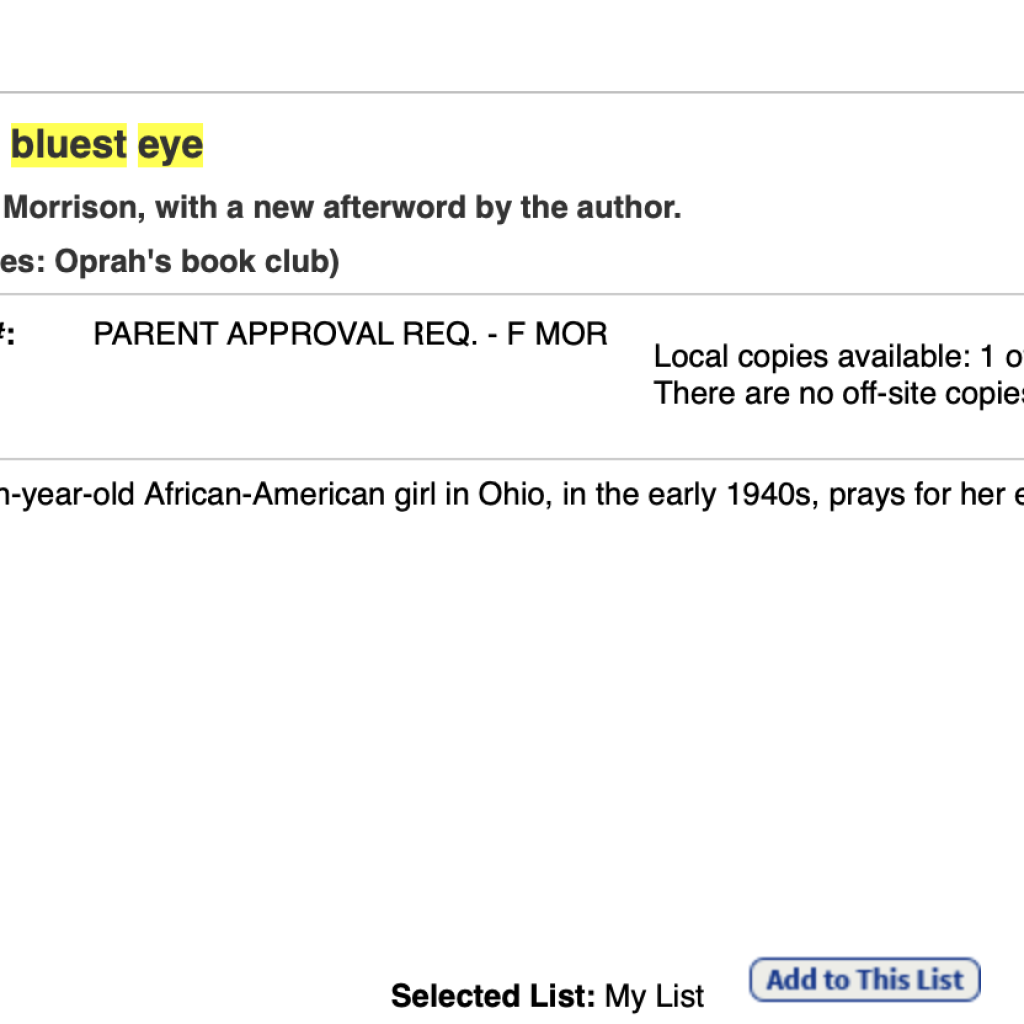
Destiny does indicate to parents which books have been restricted by the school district. One example is the book The Bluest Eye. As you can see in the screenshot below, this book is restricted.
Cameron R-1 doesn’t provide parents enough information to make an informed decision
You can see next to the “Call #” in the screenshot that the district has restricted this book and requires parental approval for students to check it out. What you do not see is the reason why the book was restricted. If you go to BookLooks, you will find a link to the content. Be forewarned: this book includes incest and molestation with a graphic first-person description of the pleasure a father feels as he impregnates his preteen daughter. How does the description in Destiny compare to BookLooks, and which resource should the school district be encouraging parents to use?
A three-person book review committee voted to restrict this book, but the district refuses to tell us why. Why then does the district refuse to allow a true informed decision by advising the public what kind of content is in these books? The committee knows what content is in this book; it is arguably what caused them to restrict it to only students above the age of 18. Why the secretary and lack of transparency?
How to determine if the books are right for your child
Unfortunately, there is no universal book rating system that makes this process easy for concerned parents. It will require effort on your part because the school district does not take responsibility for vetting the content they provide to your children. There are more than 30,000 books in the Cameron school district, and parents are left to research the content themselves.
There are numerous websites that maintain a list of concerning books which are easy to find. This website contains a list of books specific to the Cameron school district on our Dirty Book Page. We recommend copying the title you want to research and then logging into the Destiny Discover page by selecting your state, the school district, and finally the specific school within that district as shown below. Once you confirm the book is in your library, proceed to RatedBooks and see if they have a record of the book. Not every book is on RatedBooks.

How to proceed after finding a book you do not want your child to read
By default, any of the 40-some books the district has restricted are not available to students unless they are 18 years old. Unfortunately, we have reported upwards of 200 books to the district, and not everything with sexually explicit content is being restricted by the book review committee. If you find a book that isn’t restricted by the district, you can complete the district’s book restriction form. But be forewarned: you still need to monitor what books the district allows your child to access. In February of this year, the district was caught providing restricted books to students without parental consent during a Book Tasting event. Allegations were made that a school district employee completed parental consent forms so a child could read the restricted book The Hate You Give. As Ronald Reagan once said, trust but verify. You can track what books your student reads through Destiny—be sure to ask the school for help in accessing those records.
The erosion of parental rights in education in the Cameron school district
It was long ago established that parents have the absolute right to direct the education of their children. I contend that the Cameron R-1 school district is doing an end run around those rights by knowingly providing explicit adult content to our children without informing the public. This is especially true for the books the school’s book review committee has reviewed and restricted.
The board of education is derelict in its responsibility to provide oversight and inform the community
During board meetings where the Cameron R-1 school district was provided the recommendations of the book review committee, they failed to ask any questions or even vote to accept the committee’s recommendations. It would have been reasonable to ask questions such as why books were restricted or what guidelines the committee used to make decisions. The board failed in every instance to ask questions, demand transparency for the book review process, or take any vote. The board entirely abdicated its responsibilities to the community and refused to provide any oversight.
Actions the school district and board should take to inform and empower parents
To properly inform and empower parents, the Cameron R-1 school district and board should:
- Provide detailed content warnings alongside book descriptions in Destiny Discover
- Publish clear criteria used by the book review committee for restricting materials
- Ensure transparent communication about why specific books are restricted
- Implement proper oversight procedures to prevent unauthorized access to restricted materials
- Respect parental rights by making the review process more accessible, transparent and informative
- Create policy that strengthens parental rights and allows a formal book challenge process
Parents deserve to make truly informed decisions about their children’s reading materials. The current system falls short of providing the transparency and information parents need to exercise their fundamental right to guide their children’s education.
Graphic novel Watchmen violates MO statute 573.550, is available for children to read in Cameron, MO
The graphic novel book Watchmen has been removed from Missouri school districts for being in violation of MO revised statute 573.550 which prohibits schools from providing porn to minors. These books were pulled from schools back in 2022. Not in Cameron. This book is currently checked out and in the hands of a child in the Cameron school district at the time of this post and the video below.
You can confirm the book is currently in the Cameron school district for yourself, don’t take our word for it. In March of 2023 Dan Landi shared instructions on how concerned parents and citizens can look for themselves. I will like to his blog and that post, DON’T LOOK ETHEL!
In April of 2023, Andi Lockridge, the attorney who sits on the Cameron board of education, read aloud during the board meeting the complete revised statute 573.550 to make clear how the state defines pornography. Lockridge asked the superintendent Matt Robinson if any of those books, as defined by the statute she read, were in the Cameron school district. He said no. The video of the board meeting can be found on the Citizen Observer Facebook page. Lockridge begins around the 46 minute and 20 second mark.
This book Watchmen, despite being pulled by numerous Missouri school districts for violating law, doesn’t violate any district policy. There are no policies in place which would allow them to remove content like this, or to prevent something like it from being added. Currently the Cameron school district has two very vague and subjective policies for the selection and reconsideration of books. Those policies are IIAC and IIAC-R1. Those policies are so vague that the outcome of the reconsideration process will be dependent on the beliefs of those who are involved. Shouldn’t this be an objective process with clearly defined guidelines?
There is no policy in Cameron which currently allows parents or concerned tax payers to challenge a book, despite the majority of other Missouri schools having such a policy. The only option currently for Cameron residents to challenge this pornographic book is to address the board during the next school board meeting. Unfortunately the school board president Pam Ice has placed a ban on book discussions until the December 2023 board meeting.
It is time that the Cameron school district and the board of education stop ignoring this problem and take it seriously. They keep placing hurdles in the way and take no steps to make any meaningful change. They need to pass or change district policy that will protect our children, give citizens and parents a meaningful role in the education of our children.
One of our constant concerns about the Cameron school district and the board of education is that we do not feel they are listening to us. We have been saying consistently for some time that they are ignoring us. On Tuesday night two of the board members, Pam and Staci, proved it.
In this video clip you will hear a portion of the address that Paula Allen made to the board. She referred to the April board meeting when a student told the board about sexual comments being made by teachers. Pam and Staci both asked about this teacher and when he left the school district. Had the looked into the complaint of sexual harassment of students by teachers back in April, wouldn’t the know the answer to this question? Shouldn’t they know?
This clearly indicates to me this board of education does not take our concerns seriously. It appears they dismissed Kassidy Wilcox entirely. This is why parents and students say that when they come to the district with concerns and problems that we feel ignored and dismissed. Because they are ignoring and dismissing us.
Here are the documents that will be shared with the Cameron, MO, board of education at the 17 October, 2023 board of education meeting. (We will add the link of that address after the board meeting.) These documents show I have been bringing concerns about the policy being discriminatory and indications that the school district isn’t complying with policy for more than a year. My concerns have been ignored. The board of education and Matt Robinson have ignored that they are not complying with the drug testing policy.
I will also include the link to the audio file I will mention where Robinson admits on 7 December of 2022 that he does not know which drug test is being conducted and that he is unconcerned he does not know. The video should start playing at the correct time stamp, but he makes this admission at 1 minute and 24 second mark.
Not knowing what tests are being conducted is a problem because the drug testing policy JFCI-AP1 calls for a specific test to be conducted. Approved board policy, which was adopted in 2014, requires a gas chromatography/mass spectrometry (GC/MS) be conducted on all non-negative urine samples. If the school district doesn’t know which tests are being done, it is impossible to ensure it is complying with this policy.
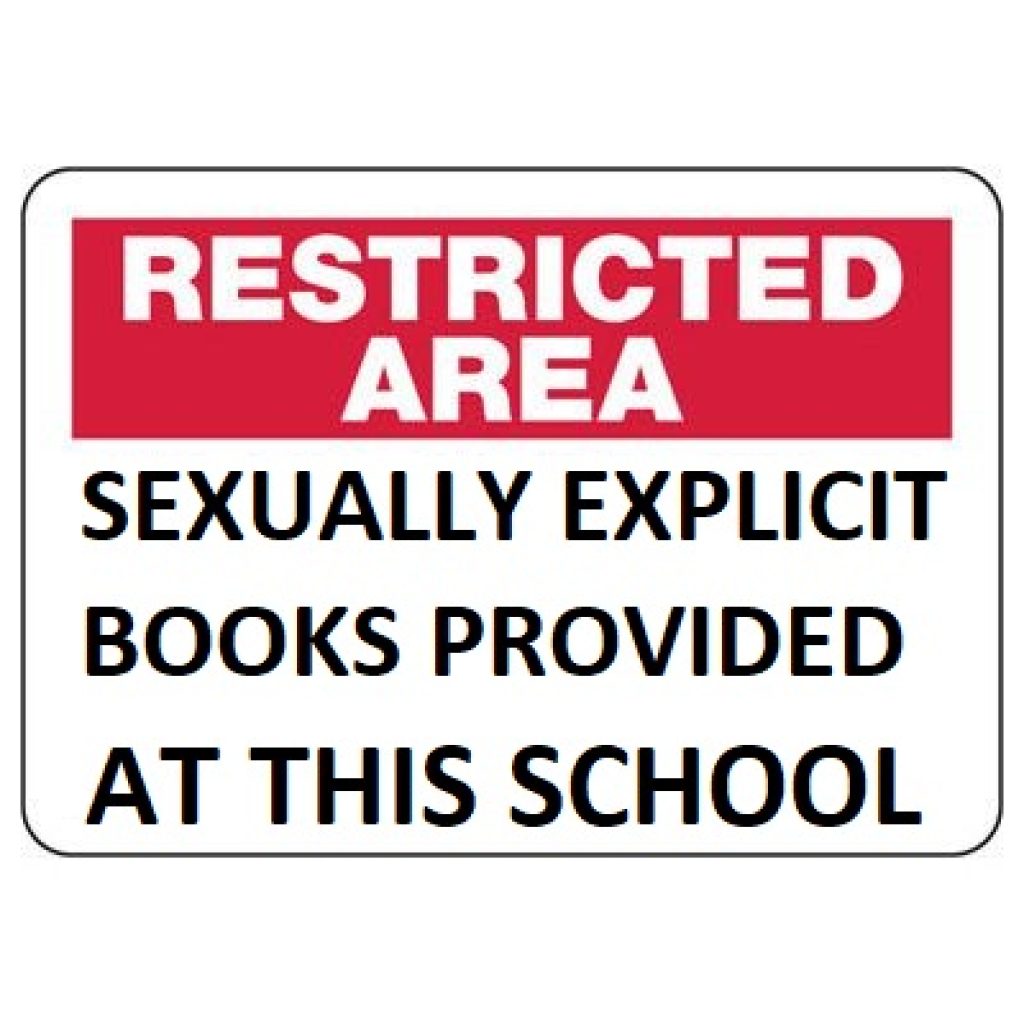
In response to parents and community members concerns about the sexually explicit adult content in books found inside the Cameron high school, the superintendent and board of education decided to send all the parents “book restriction forms”. Parents are responsible for completing the form with the book title and author of every book they do not want their children to read, and to submit it to the school librarian. The librarian will then insure that child does not check out any of those books. Sounds good, right?
Unfortunately, there is no good tool for parents to use to identify the books in the library that contain sexually explicit adult content, or any other number of concerning topics. It is the sole responsibility of the parents to know the content of more than 33,000 books in order to restrict their child from reading books each parent deems inappropriate.
At a board of education meeting in August, the board members discussed the book restriction form and suggested we use a catalog search by topic or subject to find books we don’t want our children to read. What they didn’t tell you, searching the catalog by topic or subject isn’t very effective. We use the book The Bluest Eye and the Cameron school districts online book catalog for the high school to make this point.
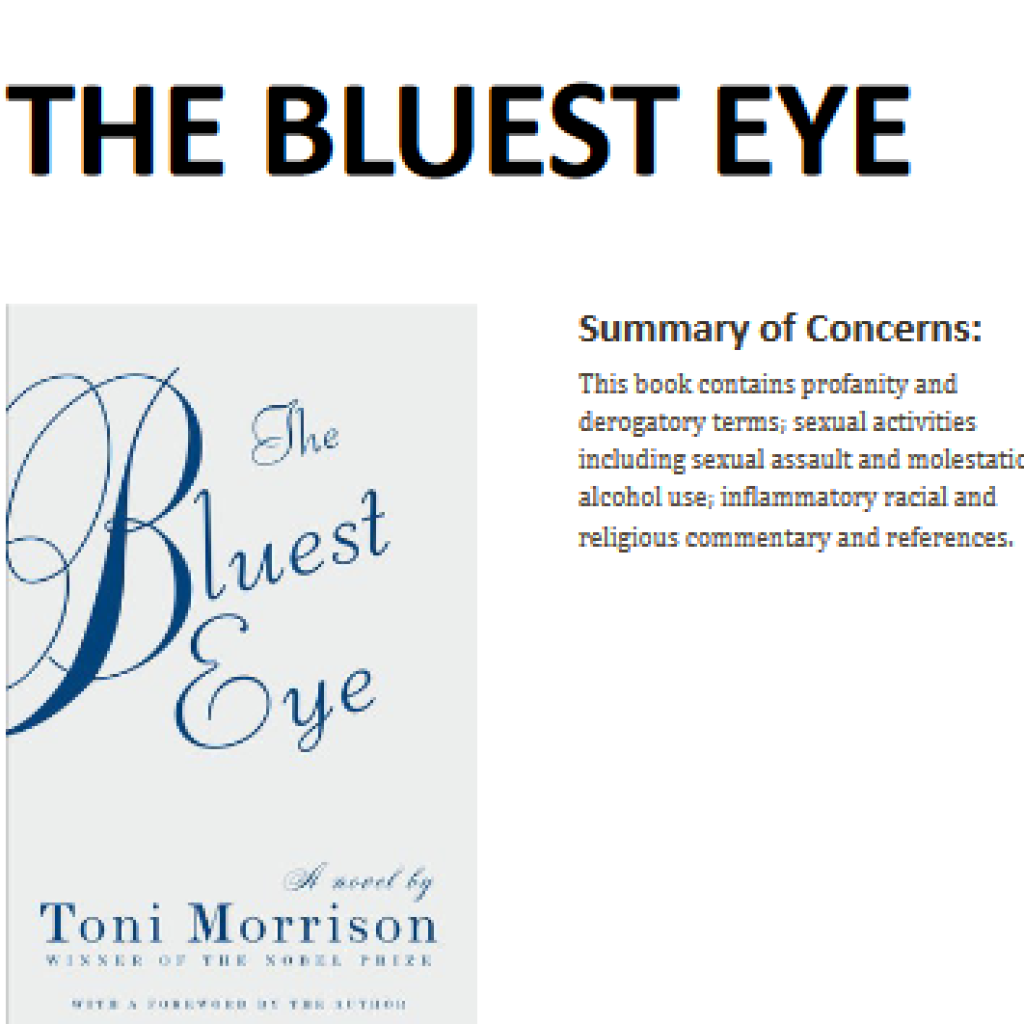
If you are not familiar with the content of the book The Bluest Eye, you read the concerning content on Book Looks or hear a reading of some of its passages on our Facebook page. The book tells of the molestation of a 12 year old girl from the perspective of the man who is assaulting her. It is dark, and difficult to read. With that information, we will show the subjects listed in the catalog for this book in the video below. You will see why what the district is proposing, that parents are responsible for finding the content they added to our libraries, isn’t a viable option.
There just aren’t any good tools for parents to identify the concerning books. The school district knows this, but they want to say they’ve done something. They have, they’ve passed their responsibility for these books to the parents.
At the special board meeting on August 29, 2023, the Cameron, Missouri board of education voted to rescind the policy KLB AP-1, which gave the community the ability to challenge a book inside the district as inappropriate. The district no longer has any obligation to even look into the matter or even review a book which concerns a parent or member of the community. It is now entirely at the boards discretion to decide if a book concerns them enough to order the district to review it.
This board of education has not taken a single meaningful step to remove or even restrict the most sexually explicit books which we have shared with them. Their only response is to give us platitudes about “diversity” and being inclusive. What are the chances that they will take any future concerns seriously?
Of additional concern, the board amended board policy BDDH-1in March in a way which allows them to restrict any speaker from discussing any topic which has been discussed previously within the last 90 days. The board of education will only allow the community to ask their majesties if they will consider allowing us to express our concerns about one of 33,000 plus books 4 times a year. And if you are given the privilege of addressing their high court, they are not obligated to even look into your concern.
This isn’t a body which is accountable to the people.